The Era of Continuous Play

Writer: Ilko Petkov 24 // 09 // 2026
Japenese Sign Photographer

The most successful games are no longer the most compelling ones, but the ones best engineered to be returned to. That logic has now spread well beyond gaming.

In January 2026, Circana’s Mat Piscatella published the year’s most-played games on US PlayStation: Fortnite, Call of Duty, GTA V, Roblox, Minecraft.

What the list describes is not a set of games so much as a set of business models. Every title on it is a live-service product running on seasons, battle passes, in-game currencies, storefronts and progression tracks. None is finished; all are designed to be re-entered. What sits at the top of the largest entertainment medium in the world is reward architecture.

Piscatella’s 2024 list is identical, in the same order, and the picture on Xbox is the same. A full year of releases did not displace any of them. Systems built for retention are proving harder to dislodge than titles built for completion.

Gaming has shifted from open play to engineered rewards.

Video games are undergoing a clear shift. The most successful titles today are defined less by a compelling core experience and more by systems of randomness, progression, and rewards designed to extend engagement. Gambling-derived mechanics — gacha systems, loot boxes, streaks, and time-limited rewards — have moved from the margins to the centre of game design, shaping how attention is sustained and monetised. The gacha segment alone is forecast to reach $43 billion by 2032.

The concentration this produces is measurable. In a single month in early 2025, more than 40% of all US PS5 and Xbox playtime went to just ten live-service titles. As one widely circulated XDA piece argued, the knock-on effect has been the erosion of the mid-tier: publishers now greenlight either very large live-service projects or small independent ones. Its verdict: “Live service games have changed the industry forever, and they’ve made it worse.”

Two factors beyond design reinforce this, according to analysis in Inverse: cost, since these titles are free or already paid for while household budgets are tight, and social lock-in, since they double as meeting places. Once a friendship group has settled inside Fortnite, leaving means leaving the group.

And it cuts across generations. While Gen Z may be more fluent in these systems, the gamer population is ageing. The ESA’s Power of Play 2025 study, covering 24,000 players across 21 countries, puts the average gamer at 41. Older players bring greater spending power, reinforcing designs that prioritise compulsion and continuity over pure play.

Person lying down in from of a wall of CRT screens
Photographer name

The online world is increasingly embracing the gamification of everyday life.

Dating, socialisation, learning, fitness, and even finance are increasingly being gamified to capture and retain attention, structured around points, streaks, rankings, rewards, and continuous feedback.

These systems are not designed for completion or satisfaction, but for sustained participation. This marks the rise of the dopamine era: a cultural and economic phase defined by experiences engineered to keep us returning.

The mechanics have travelled furthest where the stakes are highest. Utah’s lawsuit against TikTok characterises the For You feed as functionally a slot machine, arguing that users “swipe down on the app to load more videos continuously, each new video requiring only a small investment of their time, and the user is excited for each new video by the possibility that it might be incredibly rewarding.” The filing notes that one in five users aged 13 to 15 are on the platform between midnight and 5am. The Guardian has documented the equivalent loop in dating, and a US class action alleges Match Group designed Tinder and Hinge to retain users rather than match them. In both categories the stated purpose of the product sits in tension with a revenue model that depends on the user not finishing.

Finance has moved in the same direction. Polymarket and Kalshi have been discussed at valuations of roughly $20 billion each, category volumes are on track to exceed $300 billion in 2026, and Bernstein projects $1 trillion by 2030. As Forbes put it, people are now betting on the timing of a US government shutdown, the likelihood of a Taylor Swift tour cancellation, and the exact day LeBron James might retire. Robinhood launched prediction markets inside its app in 2025 and has since described the unit as the fastest-growing in the firm’s history.

Why does this work? Karl Muth, who developed the dwell-time framework YouTube adopted as its ranking signal in 2012, argues that attention has always behaved like a wager: choosing one video is a full allocation of a finite attention portfolio to a single asset, and “every additional second a viewer lingers is letting a micro-bet ride.” His data showed the deepest dwell occurred when the user felt a sense of agency, however small, over the outcome — the mechanic that converts a spectator into a stakeholder. On that reading, points and streaks are not the mechanism. The manufactured sense of stake is.

The financial consequences are now documented. A 2026 study in the Journal of Financial Economics, tracking transaction records from 183,821 US households, found that after states legalised online sports betting, frequent bettors cut their investment deposits by 56%, with every dollar deposited into a betting app corresponding to roughly 20 cents less going into long-term investments. Tested against the Eras Tour ticket release — a comparable entertainment spending shock — no equivalent effect appeared.

Attitudes are shifting alongside the behaviour. A Betterment survey of 1,000 US retail investors found 26% of Gen Z investors treat sports betting as a deliberate part of their long-term financial strategy, against 1% of boomers, and 52% had redirected money earmarked for investing into betting in the past year. CEO Sarah Levy framed the risk directly: “When a prediction market or sportsbook starts to feel like a retirement strategy, we have a problem.”

A recent Knowledge Hub report on Gen Z and financial brands supplies the context: the cohort is living through less of a classic recession than a persistent emotional one — a “vibecession” hardening into a “permacession” — and is responding in two opposing modes, joy-maxxing and anxiety-maxxing. Gamified products are effective at intensifying both.


Person stood in front of a large number of CRT screens
Photographer name

Gamification will become the operating system of the consumer economy.

What started as a set of consumer engagement tactics to make complex systems fun is becoming a shared behavioural infrastructure.

Across finance, commerce, and social life, game mechanics are being built directly into tech to support everyday life and learning, shaping how people spend time, money, and attention. “Revolut and SAS partner to turn everyday spending into rewards.” The average global consumer now belongs to more than ten loyalty programmes. Duolingo built a company valued at around $15 billion on the back of a streak counter.

The category evidence is substantial. Starbucks Rewards drove close to 60% of US company-operated revenue in FY2025 — more than $13 billion in member spend — and in March 2026 the brand reintroduced tiering, sorting 35 million active members into Green, Gold and Reserve. McDonald’s reports 210 million 90-day active loyalty users across 70 markets and roughly $40 billion in system-wide sales to members in 2025, close to double the 2023 figure. CFO Ian Borden calls active loyalty membership the company’s “single most important digital metric,” and told analysts US customers visited around 10 and a half times in the year before joining, and 26 times in the year after. Taco Bell grew active loyalty members 31% in 2025.

By 2024, according to PAR Punchh data, Gen Z accounted for nearly half of all new restaurant loyalty sign-ups, overtaking millennials for the first time, and nearly 70% of diners said the programmes help them manage costs. The same research found a ceiling: more than half of consumers prefer to manage no more than five loyalty accounts. Participation is rising and tolerance is narrowing at once.

Brands are also moving inside games rather than advertising around them. Hellmann’s built Unilever’s first Fortnite island, Loot Irresistível, a colosseum made of food hosting the platform’s first “eat ’em up” challenge; Ogilvy Germany’s Matt Longstaff described the ambition as making food “a main character again” in a medium where it had become set dressing. e.l.f. became the first beauty brand to launch a financial literacy game on Roblox. Our Culture Monitor filed these under a label that still applies: the rise of “fourth space” branding, where Gen Alpha expects brands to do something useful or entertaining inside their entertainment spaces rather than interrupt them. Early effectiveness data supports the move — eye-tracking research from Gameloft for Brands found in-game video ads held attention for 92.2% of their viewable duration against 88.4% for YouTube pre-rolls, with a reported 25% lift in brand recall. It is a vendor study, but the direction fits the pattern: participation outperforms exposure.

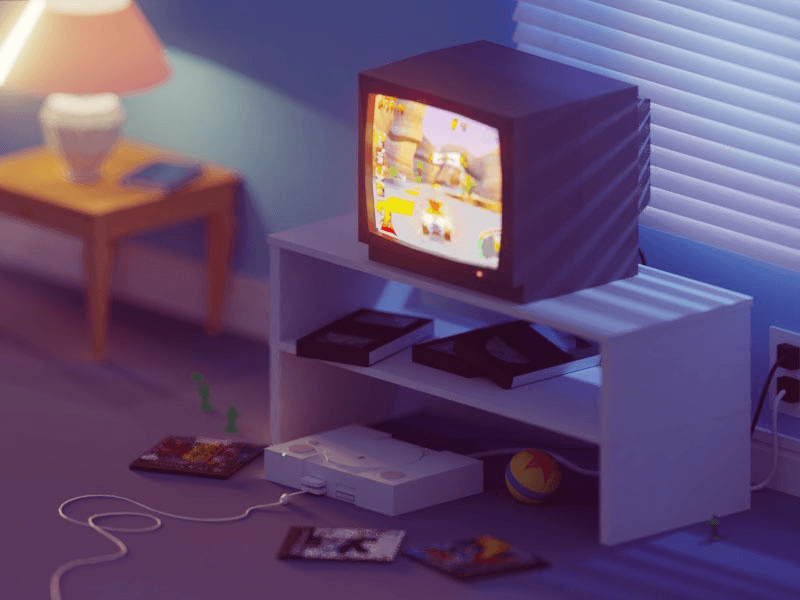
3D Render of a games console and television
Image credit

The brands that win won't just gamify. They'll design for meaning.

Gamification is now table stakes. Most brands are still only optimising for clicks, streaks, and instant dopamine. The brands that pull ahead will use game mechanics to build genuine value: systems people return to because they want to, not because they’re engineered to keep them there or feel guilty if they don’t.

Two signals suggest the market is already correcting toward that position.

The first is behavioural. Gen Z has coined regular-maxxing: deliberately becoming a regular at a small number of neighbourhood bars, cafés and shops. What is notable is how little of the discourse concerns points. Participants describe menu items named after them, handwritten cards when staff hear they are moving, invitations to employees’ birthday parties. As Gen Z distinguishing between reward-maxxing and relationship-maxxing — emerging in the same market where Bilt, the rent-rewards platform, was valued above $10 billion. Engineered loyalty and earned loyalty are both growing; they are not interchangeable.

The second is commercial. The cozy gaming market reached $973 million in 2024 and is projected to hit $1.47 billion by 2032 — titles with no fail state, no streak and no loot, with over 57% of US players reporting they help manage everyday stress. Pokémon released Pokopia, a life sim, in March 2026. It is a growing category defined by the absence of the mechanics the rest of the industry is adding, and the ESA data points the same way: players say games bring them joy (84%) and provide stress relief (81%). Neither motivation is a streak.

The strongest brands here will act as dampeners, absorbing volatility rather than amplifying it, and sets out three principles: let people define their own goals, design for function rather than addiction, and add friction at moments of consequence.

Woman Playing Console
Photographer name

Reward progress, not just participation.

01

Milestone architecture outperforms streaks. Nike Run Club’s ladder runs from a first 5K to lifetime distance badges, giving runners a visible record of real advancement rather than a penalty for missing a day. Cross-platform data from the gamification firm Trophy makes the point: users pursuing the hardest achievements show 14-day retention of 74%, against 32% for the easiest.

Build worlds, not just loops.

02

The most successful gamified experiences create environments people want to inhabit, not mechanics they feel compelled to repeat. The growth of the cozy category demonstrates demand for engagement without anxiety.

Make the social layer the mechanic.

03

The strongest gamified systems design sharing into the loop itself. Spotify Wrapped 2025 reached 200 million engaged users and around 500 million shares in its first 24 hours, with shares up 41% year on year, driven largely by a new feature allowing users to compare results with friends. Nobody got points for sharing. The reward was identity and self-expression: showing the world who you are through what you listen to.

The question originally posed was which always-on live service game would dominate in 2026. On the evidence, that question is no longer confined to gaming. The mechanics have been adopted across dating, media, retail, fitness and personal finance, and the costs of the extractive versions are starting to be quantified. What remains undecided is whether the brands adopting them build systems people are willing to stay in.

Circana / Mat Piscatella via GameSpot and Inverse · XDA · Dataintelo, Gacha Games Market · ESA, Power of Play 2025 · KSL on Utah v. TikTok · NPR on the Match Group suit · CNBC on Bernstein’s $1trn forecast · Karl Muth, “When Betting Becomes the Feed”, Mozilla FoundationKnowledge Hub · Baker, Balthrop, Johnson, Kotter & Pisciotta, Journal of Financial Economics 183 (2026), via StudyFindsKnowledge Hub · Betterment survey via BloombergKnowledge Hub · “Money Talk: Gen Z & Financial Brands in 2026” — Knowledge Hub · FF News / Revolut × SAS · Comarch, Customer Loyalty Predictions 2025 · Starbucks Rewards tiering · Restaurant Dive on McDonald’s loyalty and PAR Punchh / Business Insider — Knowledge Hub · Deconstructor of Fun on Duolingo · Canvas8 on Hellmann’s Fortnite islandKnowledge Hub · e.l.f. on Roblox via Culture Monitor #14 · Gameloft for Brands / Mediamento studyKnowledge Hub · Protein, “Regular-maxxing”Knowledge Hub · Outlook Respawn on the cozy economy · Trophy on Nike Run Club · Music Business Worldwide on Wrapped 2025